
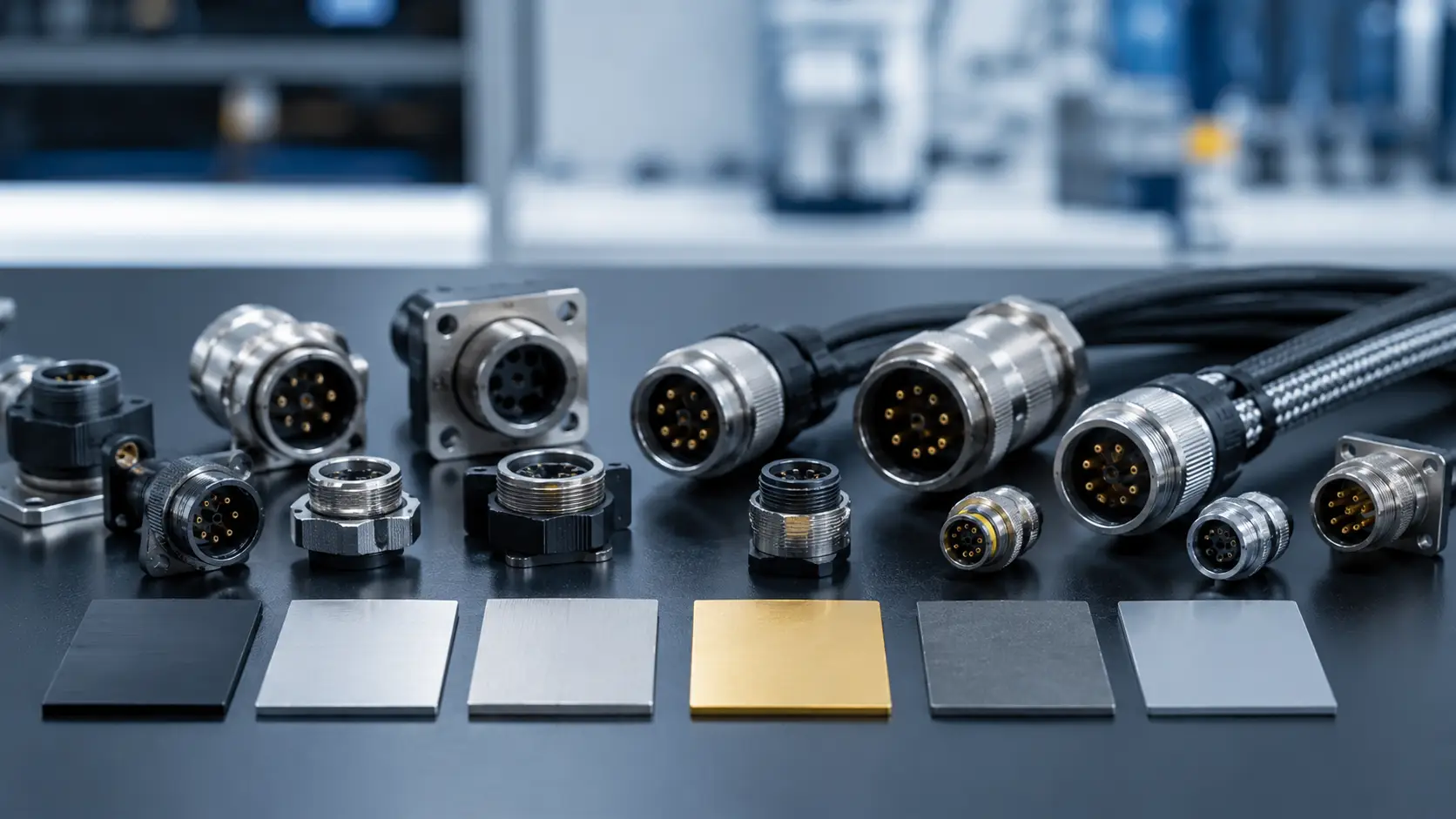
Selecting the right connector often starts with electrical specifications, pin count or environmental sealing. While these are all important, one factor is frequently underestimated: the connector material itself.
The shell material has a direct impact on durability, weight, corrosion resistance and long-term reliability. A connector that performs perfectly in one environment may fail much sooner in another simply because the housing material was not suited to the application.
Whether you're designing equipment for industrial automation, aerospace, defence or offshore environments, understanding the differences between connector materials helps you make better engineering decisions from the start.
Why Connector Material Matters
Connectors are exposed to far more than electrical loads. Throughout their lifetime they often face vibration, humidity, chemicals, UV exposure, dust, salt spray and extreme temperatures.
The wrong material can lead to:
- Premature corrosion
- Increased maintenance
- Higher replacement costs
- Reduced reliability
- Unexpected downtime
Choosing the right material at the design stage reduces these risks and contributes to a more robust system throughout its entire lifecycle.
Aluminium: Lightweight and Strong
Aluminium is one of the most commonly used connector shell materials, particularly where weight is a critical factor.
It offers an excellent balance between mechanical strength and low weight, making it popular in aerospace, transportation and portable equipment.
Advantages
- Excellent strength-to-weight ratio
- Easy to machine
- Cost-effective
- Suitable for demanding mechanical applications
Considerations
Although aluminium provides good corrosion resistance when properly treated, it may require additional surface finishes for highly corrosive environments such as offshore installations.
Stainless Steel: Built for Harsh Environments
When equipment operates in aggressive environments, stainless steel is often the preferred choice.
Its outstanding resistance to corrosion makes it ideal for applications exposed to moisture, chemicals or saltwater.
Typical industries include:
- Offshore
- Marine
- Food processing
- Chemical processing
- Outdoor infrastructure
Although stainless steel connectors are generally heavier and more expensive than aluminium alternatives, their durability often results in lower maintenance costs over time.
Brass: Reliable and Versatile
Brass has been used in connector manufacturing for decades due to its excellent machinability and mechanical stability.
It performs well in a wide variety of industrial applications and offers good corrosion resistance, particularly when combined with protective plating.
Brass is commonly selected when durability and manufacturing precision are more important than minimizing weight.
Composite Materials: High Performance with Low Weight
Composite connectors have become increasingly popular in industries where both weight reduction and corrosion resistance are important.
Unlike metal housings, composite materials do not suffer from galvanic corrosion and often provide excellent resistance to chemicals and harsh environmental conditions.
This makes them particularly attractive for:
- Aerospace
- Defence
- Robotics
- Medical equipment
- High-performance industrial systems
Modern composite connectors can deliver impressive mechanical performance while significantly reducing overall system weight.
Selecting the Right Material
There is no universal "best" connector material. The right choice depends entirely on the application.
Consider the following questions during the design phase:
- Will the connector be used indoors or outdoors?
- Is weight an important design factor?
- Will it be exposed to chemicals or saltwater?
- Are extreme temperatures expected?
- How often will the connector be connected and disconnected?
- What is the expected service life of the equipment?
Answering these questions early helps prevent expensive redesigns later in the project.
Common Selection Mistakes
Many connector issues originate long before installation. Some of the most common mistakes include:
Focusing only on purchase price
A cheaper connector may result in significantly higher maintenance or replacement costs over the lifetime of the equipment.
Ignoring the operating environment
A connector that performs well in a clean production facility may not survive in an offshore or agricultural environment.
Overlooking mechanical loads
Continuous vibration, repeated mating cycles and mechanical stress can all influence material selection.
Assuming all connectors are equal
Two connectors may appear identical while using completely different shell materials, coatings and manufacturing processes.
Understanding these differences helps engineers avoid unnecessary failures and improve long-term system reliability.
Engineering Support Makes the Difference
Connector selection rarely depends on a single specification. Material choice must be balanced with electrical performance, environmental protection, mechanical strength and long-term availability.
For complex projects, involving engineering support early in the design process often prevents costly modifications later in development.
Selecting the right connector material from the beginning contributes to more reliable systems, reduced maintenance and longer product lifecycles.
Conclusion
The connector shell is much more than a protective housing. It plays a critical role in how reliably a system performs throughout its service life.
By carefully evaluating environmental conditions, mechanical requirements and lifecycle expectations, engineers can select materials that improve reliability while reducing maintenance and downtime.
Whether the application requires lightweight aluminium, corrosion-resistant stainless steel, versatile brass or modern composite materials, choosing the right material early in the design process is an investment that pays off throughout the entire lifecycle of the equipment.
Frequently Asked Questions
Which connector material offers the best corrosion resistance?
Stainless steel and many composite materials provide excellent corrosion resistance, making them suitable for harsh outdoor, marine and chemical environments.
Are aluminium connectors suitable for industrial applications?
Yes. Aluminium connectors offer an excellent balance between strength and weight and are widely used in industrial automation, aerospace and transportation.
When should composite connectors be considered?
Composite connectors are ideal when low weight, corrosion resistance and mechanical performance need to be combined, particularly in aerospace, defence and robotics applications.
Does connector material affect reliability?
Absolutely. The correct material helps protect against corrosion, vibration, environmental exposure and mechanical wear, all of which contribute to a longer service life and more reliable system performance.